
Methodology
Research Design
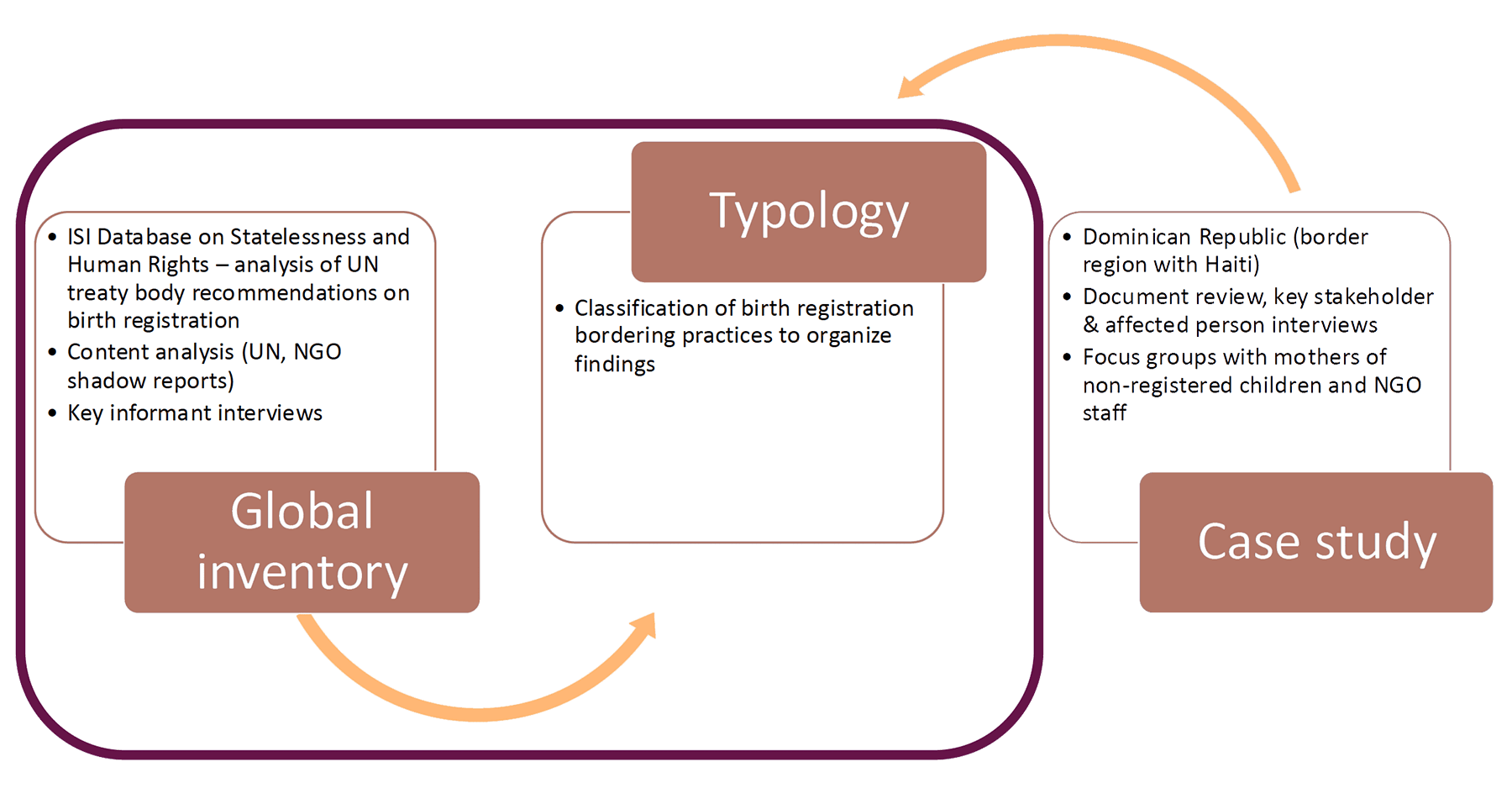
To operationalize intersectionality as a method, the research design examined exclusionary birth registration practices around the world through a systematic content analysis of UN recommendations by the Human Rights Council, Committees on the Elimination of Gender and Racial Discrimination, Migrant Workers, the Rights of the Child, and to a lesser extent, the committees on the Rights of Persons with Disabilities, and the Committee against Torture, as well as the committees monitoring states’ compliance with the International Covenants on Civil and Political Rights, and Economic, Social and Cultural Rights. The main dataset used to construct the Global Inventory of Exclusionary Birth Registration Practices (hereafter Global Inventory) was the Institute on Statelessness and Inclusion’s Database on Statelessness and Human Rights (ISI, Citation2020).
As of mid-2022, those committees had issued a total of 756 recommendations to 143 UN Member States on improving birth registration. After identifying the relevant UN recommendation, the research process worked backwards to then analyze thousands of pages of UN, government, and civil society reports to identify and define problematic bordering practices where they exist. The included practices are defined within the project as any of the different elements of governance which can enact borders—whether operational, administrative, legal, or policy-based. Content analysis was complemented by high-level interviews with key informants from the CEDAW committee, UNICEF, UNHCR, and civil society networks working on these issues, among others.
This study adopts a truly intersectional methodological approach in order to overcome the prevailing siloed approach to the issue of birth registration. This entailed an examination of the concluding observations issued on the matter from all the relevant human rights mechanisms. It also brings into view the experiences of diverse groups of parents on the move, and the ways their precarious status and intersecting forms of discrimination can impact their children’s access to the right to birth registration. This is an important corrective to much of the existing literature on children’s rights.
The research design establishes the breadth of the problem through the global inventory, and takes an in-depth look at how such exclusions continue despite efforts of governments and civil society organizations to regularize migrants and naturalize their descendants.